Start With Your Options
Your house is too hot. Or too cold. Maybe the air has gone weak, or the system makes a strange noise. You want to know what is wrong and what you can do about it.
Neededuntil Heating & Air is a referral service. We do not fix systems. We connect homeowners in Des Moines and the Des Moines area with independent local providers who do the work. You tell us what is going on. A provider in our network can then reach out to talk it through.
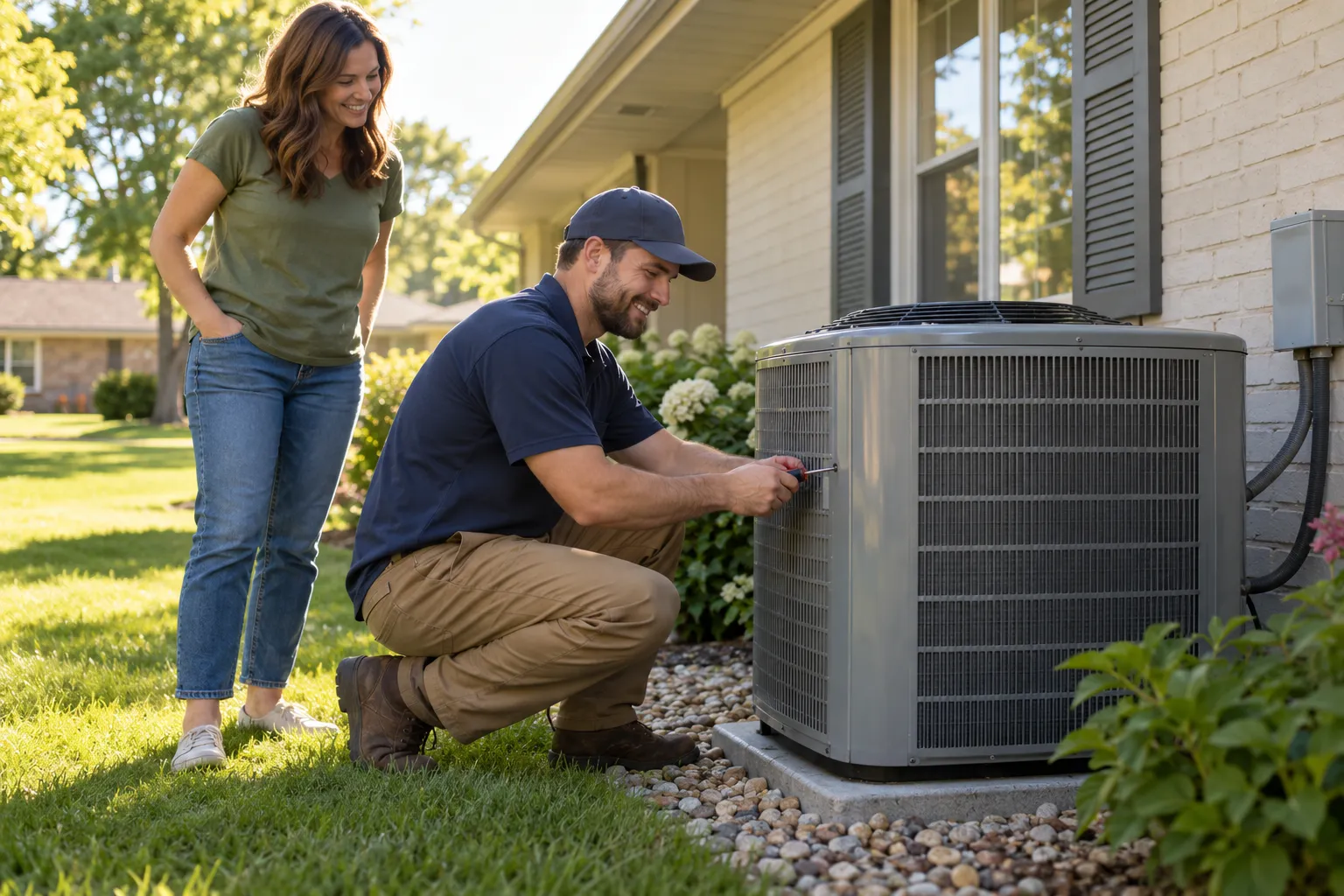
Before anyone starts work, you should know your options. A repair may be enough. A single part may need a swap. Sometimes a new system makes more sense. A good provider explains each path in plain words and puts the price in writing.
If your AC quits in a heat wave, you may need Emergency AC repair. Many providers can respond quickly, but availability varies. Request a callback to check provider availability near you.
Get Started
Not sure what to do yet? That is fine. Take a few photos of the unit. Jot down what you hear, smell or feel. Then request an estimate. You are under no obligation to hire anyone. You decide what happens next.
How It Works
What Neededuntil Heating & Air is
Neededuntil Heating & Air helps homeowners find HVAC service. HVAC means heating, ventilation and air conditioning. It is the gear that heats and cools your home. Neededuntil Heating & Air does not send out crews. The providers in our network are independent local businesses. They set their own prices and run their own jobs.
Know your options first
Most people feel rushed when the air stops working. Slow down for a minute. You usually have a few paths:
- Repair. Fix the part that failed.
- Part swap. Replace a worn piece, like a motor or a switch.
- Replace the system. Put in a new unit when the old one is tired or costly to keep fixing.
Ask each provider to explain the choices. Ask what each one costs now and what it may cost later. As a rough U.S. guide, many AC repairs run from about $150 to $650, and a full system replacement often runs from about $5,000 to $12,000. Prices vary by job, so always get a written quote.
Get your paperwork ready
Photos and notes make every talk easier. Snap the label on the unit. Write down when the trouble started. Keep old bills and service records in one place. If storm damage may be involved, take pictures of it. Providers can often help document damage for a claim.
What happens next
1. You share a few details about the problem. 2. A provider in our network reaches out. 3. The provider looks at the system and explains your options. 4. You compare, ask questions and choose. Or you say no.
Serving Des Moines and Beyond
Neededuntil Heating & Air works with independent providers in Des Moines and across the Des Moines area. Homes here face real weather. Winters are cold, with deep frost in the ground. Summers are hot and sticky. Storms bring thunder, hail and heavy rain. Spring can bring flooding.
That mix is hard on heating and cooling gear. Furnaces run long hours in winter. AC units fight humid heat for months. Hail can dent an outdoor unit. Wet springs can threaten gear in a basement.
The homes are mixed too. Many are frame houses that have stood for decades. Many are bungalows or ranch homes. Most have full basements, and many have a sump pump. A sump pump is a small pump that moves water out of the basement. Local providers know these house types and the trouble they can bring.
Provider coverage differs from one street to the next. Availability changes too. Ask about it when you talk, and ask what the visit will include.
Ready to see your options? Send in a few details and request an estimate. There is no obligation.
Get Started
You can also add photos of the unit, the filter or any damage. More detail helps a provider give you a clearer answer.
Heating and Cooling Tips for Local Homeowners
Summer storms and your AC
Hot, humid summers push an AC hard. Thunderstorms and hail add more stress. Hail can bend the fins on the outdoor unit. Fins are the thin metal slats that help move heat. A power surge can harm the unit too. Take photos after a big storm, even if the unit seems fine.
Deep frost and your furnace
Cold winters mean your furnace works long hours. A furnace is the box that heats air and sends it through the house. Weak heat, odd smells or loud bangs are signs to get it checked. Do not wait for the coldest night.
Basements and sump pumps
Many homes here have full basements, and many furnaces sit down there. Spring flooding can reach the floor. If water touched your furnace or water heater, stay away from it. Ask a provider to inspect it before you use it. Keep your sump pump working, and keep gear up off the floor where you can.
Older frame houses, bungalows and ranch homes
Frame houses from many decades ago often have tight attics, narrow ducts or old wiring. Ducts are the tubes that carry air. Bungalows and ranch homes may need one system to serve a wide floor plan. Ask the provider how the size of a system fits your house. Bigger is not always better.
Keep a simple home file
Save the model number, the install date and past bills. Take clear photos of the labels on each unit. Write down dates and symptoms. Some policies may cover sudden damage, so check your policy. Providers can often help document damage for a claim.
Small habits that help
Change filters on schedule. Keep leaves and debris away from the outdoor unit. Clear a safe space around the furnace. Book a tune-up before summer and again before winter.
Ask About Your System
Have a question about your AC or furnace? Share what you see and hear. Add photos if you have them. A provider in our network can reach out and walk you through the choices.
Request a callback to check provider availability, or use the request form to ask for an estimate. There is no obligation, and the choice stays yours.
Get Started