Need residential furnace repair in Des Moines?
Tell us what your system is doing. Send a few notes or photos, and a provider in our network can reach out about next steps. No obligation.
No obligation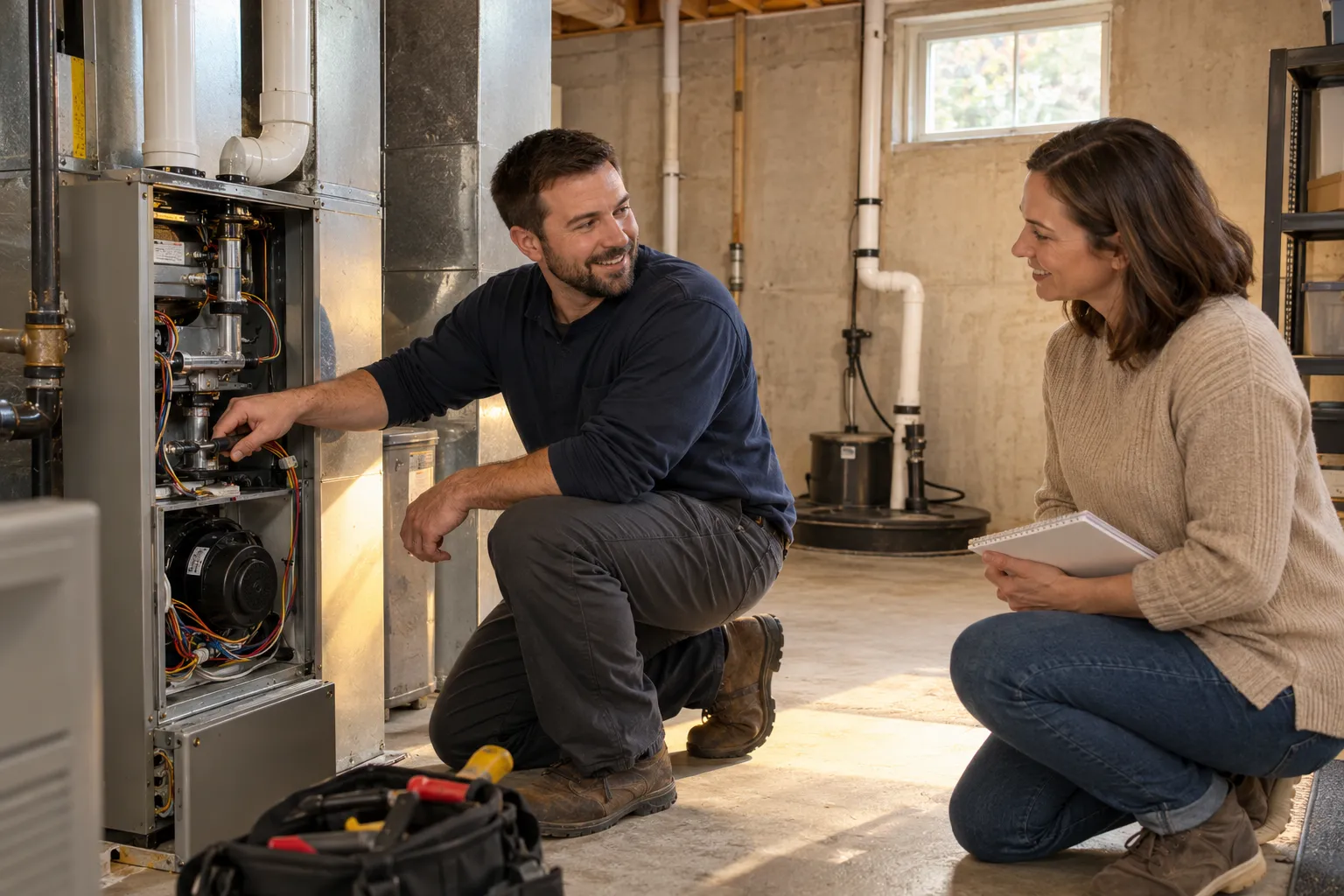
A furnace that stops in a cold snap is stressful. You want heat, and you want to know what comes next. Neededuntil Heating & Air helps you sort that out. We explain common furnace problems in short, plain words. You see your options before anyone starts work.
Neededuntil Heating & Air is a referral service. We do not do the repairs. We connect you with independent HVAC service providers in our network who work in the Des Moines area. Pick up your photos and notes, ask good questions, and request an estimate. There is no obligation. You decide if, when and with whom to move forward.
Gas smells like rotten eggs. If you smell it, stop reading and act.
A gas leak is not a do-it-yourself job. Once it is safe, you can look for furnace help.
Carbon monoxide (CO) is a gas you cannot smell. A damaged furnace can make it. Headaches, dizziness and nausea are warning signs. Go outside and call 911 if you feel sick. Test your CO alarms each season.
These checks take a few minutes. Some fix the problem. All of them give a provider useful clues.
Set it to heat. Set the temperature a few degrees above the room. Put in fresh batteries if it has them.
Most furnaces have a switch that looks like a light switch. Make sure it is on. Look at the breaker panel too. In a basement, look for water near the unit. After spring flooding or a sump pump failure, do not touch standing water near the furnace. Ask a provider for help.
The filter is a paper screen that catches dust. When it clogs, air cannot flow. The furnace may overheat and shut itself off.
Deep frost and heavy snow can block the vent pipes outside. Gently clear snow away. Do not poke anything inside the pipes.
Still no heat? Stop trying fixes and ask for help.
Some signs mean act today. Others mean plan a visit soon.
Turn the furnace off and get help.
A provider starts by asking what you saw and heard. Then they check the thermostat, filter, ignition, flame, blower and vents. They also test safety controls.
Next, they explain the problem in plain words. You should get a written quote before work begins. You say yes or no. Nothing starts until you agree.
The igniter is the part that lights the gas. It wears out with age. A weak one can leave you with no flame.
This small rod tells the furnace the flame is on. When it gets dirty, the furnace shuts down. A cleaning often solves it.
The blower pushes warm air through your home. A worn motor or fan can make noise or move little air.
The control board is the furnace's brain. A bad board or loose wire can cause odd starts and stops.
The heat exchanger keeps burner gases apart from your home air. A crack is a safety issue. It often points toward replacement.
Many furnaces last about 15 to 20 years. Older frame houses and bungalows may also have tired ductwork, so ask about that too.
Think about replacement if:
If you search for furnace replacement near me, ask each provider to explain both paths. Ask for the repair price and the replacement price side by side. Know your options, then decide.
A little prep makes any estimate clearer.
Photos and notes save time. They also help you compare quotes fairly.
Ask, then decide. A good provider is glad to answer.
Some policies may cover sudden damage. Many do not cover wear and age. Check your policy. Providers can often help document damage for a claim. Keep your photos, notes and quotes together.
A calm plan beats a rushed guess. Request a callback to check provider availability in your area.
A provider checks the flame, vents and safety controls so your furnace runs safely again.
They look for the cause of the problem, not just the symptom you noticed.
You get a written price and a plain explanation before any work begins.
Providers can walk you through fixing the unit or replacing it, so you can compare choices.
Prices vary by furnace age, brand, parts and your home. These are typical U.S. ranges only. Always ask for a written quote before you agree to any work.
| Item | Typical range | Notes |
|---|---|---|
| Diagnostic visit | $75 – $200 | Often applied toward the repair |
| Flame sensor cleaning or swap | $100 – $300 | A common, small fix |
| Igniter replacement | $150 – $450 | Depends on furnace type |
| Blower motor | $400 – $1,500 | Cost depends on motor type |
| Control board | $300 – $900 | Varies by model and brand |
| Heat exchanger repair | $1,500 – $3,500 | Often leads to replacement |
If you smell gas or a CO alarm sounds, leave the house and call for emergency help.
Check the thermostat, power, filter and vents. Take photos and write notes.
Request a callback or send the request form to ask about provider availability.
Review the written quote and your options. Ask questions, then choose.
We explain common furnace problems and choices in plain words before you talk to anyone.
You reach local HVAC providers in our network who do the actual work.
Photos and notes help you get clearer estimates and keep good records.
Request an estimate and decide for yourself. You are never pushed to say yes.
Tell us what your system is doing. Send a few notes or photos, and a provider in our network can reach out about next steps. No obligation.
No obligationIt could be a dirty filter, a flame sensor that needs cleaning, or an igniter problem. Check the thermostat and filter first. If the air stays cold, ask a local provider to take a look.
Many repairs fall between about $100 and $1,500, depending on the part. Big jobs like a heat exchanger cost more. Prices vary, so ask for a written quote.
If the furnace is over 15 years old and repairs are frequent, replacement may make sense. Ask providers for both prices, then compare them side by side.
Tell us what your system is doing. Send a few notes or photos, and a provider in our network can reach out about next steps. No obligation.
No obligation