Need ac installation & replacement in Des Moines?
Tell us what your system is doing. Send a few notes or photos, and a provider in our network can reach out about next steps. No obligation.
No obligation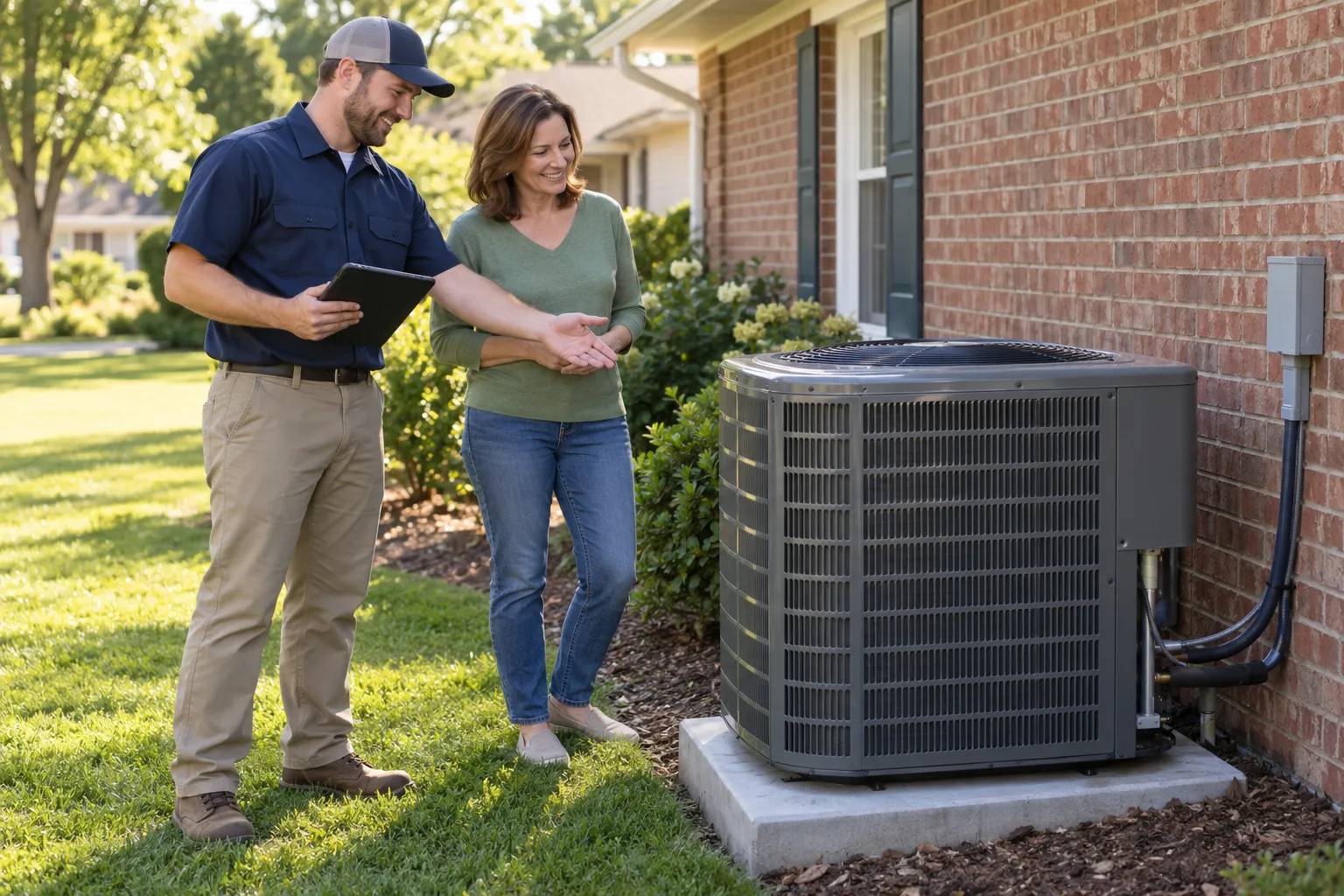
Is your AC old, loud, or too weak for a hot, humid summer? You may be weighing a repair against a full replacement. That is a big decision, and you should not rush it. Neededuntil Heating & Air explains your choices in short, plain words so you know what to expect.
We do not install anything ourselves. Neededuntil Heating & Air is a referral service. We connect homeowners in the Des Moines area with independent local HVAC providers who do the work. Gather some photos and notes, ask good questions, and request an estimate with no obligation. Ask, then decide.
Your AC is old, noisy, or failing. Now you wonder if one more fix makes sense. That is a fair question.
If the unit just quit during a heat wave, ask a provider about emergency AC repair first. A repair can buy you time. Then you can plan a replacement with a clear head instead of in a panic.
No single sign decides it. Look for a pattern.
Here is a handy rule. If one repair costs close to half the price of a new unit, ask for a replacement quote too. Then compare both.
Being organized makes every estimate better. It also saves you from answering the same questions again and again.
Some policies may cover sudden damage, such as hail that dents the outdoor unit. Check your policy. Providers can often help document damage for a claim.
There are a few common setups. Each fits a different home.
An outdoor unit and an indoor coil share one set of ducts. This is the usual choice for frame houses and ranch homes with ductwork.
A heat pump cools in summer and warms in winter. In very cold weather, many homes pair one with a backup heat source. Ask a provider if it suits your winters.
This has no ducts. A small indoor unit on the wall cools one room or zone. It can help with additions, sunrooms, or older homes with no duct runs.
All parts sit in one outdoor cabinet. It is less common in homes with full basements, but it exists.
Bigger is not better. An AC that is too big cools the air fast, then shuts off. It never dries the air well. Humid summers feel clammy.
An AC that is too small runs nonstop and still falls behind.
Ask the provider for a load calculation. That is a math check of how much cooling your home needs. It looks at your walls, windows, attic, and layout. A rule of thumb based on square feet alone is not enough.
A full job often has these steps. Ask each provider to list them in writing.
The outdoor unit and indoor coil should work as a pair. Mixed parts can cut cooling and shorten the life of the system.
Also ask about your ducts. Leaky or crushed ducts waste cool air, especially in basements and tight attics. A provider may suggest sealing or fixing them.
Your heating and cooling often share the same blower and ducts. If your furnace is old too, you might search for furnace replacement near me and plan both jobs together. Ask what makes sense for your home.
You will see a number called SEER2. It tells you how much cooling you get for the power you use. A higher number means lower power use, but a higher price tag.
For hot, humid summers, ask about humidity control too. A unit that runs at two speeds often dries the air better.
Ask if any local or utility rebates apply. Offers change, so confirm the details with the provider.
Write these down before you talk. Then compare the answers.
Ask each provider for a written quote. Line up the same items in each one. A low number can hide a smaller unit or fewer parts.
Take your time. Ask, then decide. Any HVAC service worth hiring will answer your questions without pressure.
The provider takes out your worn-out AC and hauls it away as part of the job.
A new condenser (the outdoor box) is set on a level pad and wired in.
The indoor coil is paired with the new outdoor unit so both work together.
The provider checks refrigerant, airflow, and the thermostat before the job is done.
These are typical U.S. ranges. Your price depends on home size, system type, ducts, and local rates. Always get a written quote from each provider before you agree to anything.
| Item | Typical range | Notes |
|---|---|---|
| Central AC replacement | $5,000 – $12,000 | Outdoor unit and indoor coil, installed |
| Outdoor unit only | $2,000 – $5,500 | Works only if the indoor coil is a match |
| Heat pump system | $6,000 – $14,000 | Cools and heats; cold climates may need backup heat |
| Ductless mini-split | $3,000 – $7,000 | Per zone; more rooms cost more |
| Duct repair or changes | $500 – $5,000 | Depends on how much work the ducts need |
| Pad, wiring, and permit | $300 – $2,500 | Varies by town and by your electrical panel |
Snap the unit labels, list problem rooms, and find your power bills and past repair receipts.
Tell us about your home and your cooling trouble. It takes only a few minutes.
Line up system type, size, parts, warranty, and what the price includes.
Choose the quote that fits, then set a start date that works for you.
Trade terms get a quick meaning, so you know what each quote line really says.
Local providers do the work. Neededuntil Heating & Air only helps you reach them.
Photos and notes make your estimate request clearer and easier to compare.
Requesting an estimate does not commit you to anything. You decide the next step.
Tell us what your system is doing. Send a few notes or photos, and a provider in our network can reach out about next steps. No obligation.
No obligationLook at age, repair history, and cost. If the unit is over 12 years old or one fix costs near half a new unit, ask for both quotes.
Many standard swaps take one day, but it varies. Duct work, new wiring, or a mini-split with several zones can take longer. Ask the provider for a schedule in writing.
Sometimes. The indoor coil must match the new outdoor unit. If it does not, mixed parts can cut cooling and cause trouble. A provider can check what fits.
Tell us what your system is doing. Send a few notes or photos, and a provider in our network can reach out about next steps. No obligation.
No obligation